
My IELTS Exam Recap
— October 24, 2020
Cost Breakdown
Here’s a quick rundown of what I spent on IELTS prep:
| Item | Cost |
|---|---|
| Cambridge IELTS Books 4-14 | ¥60.00 |
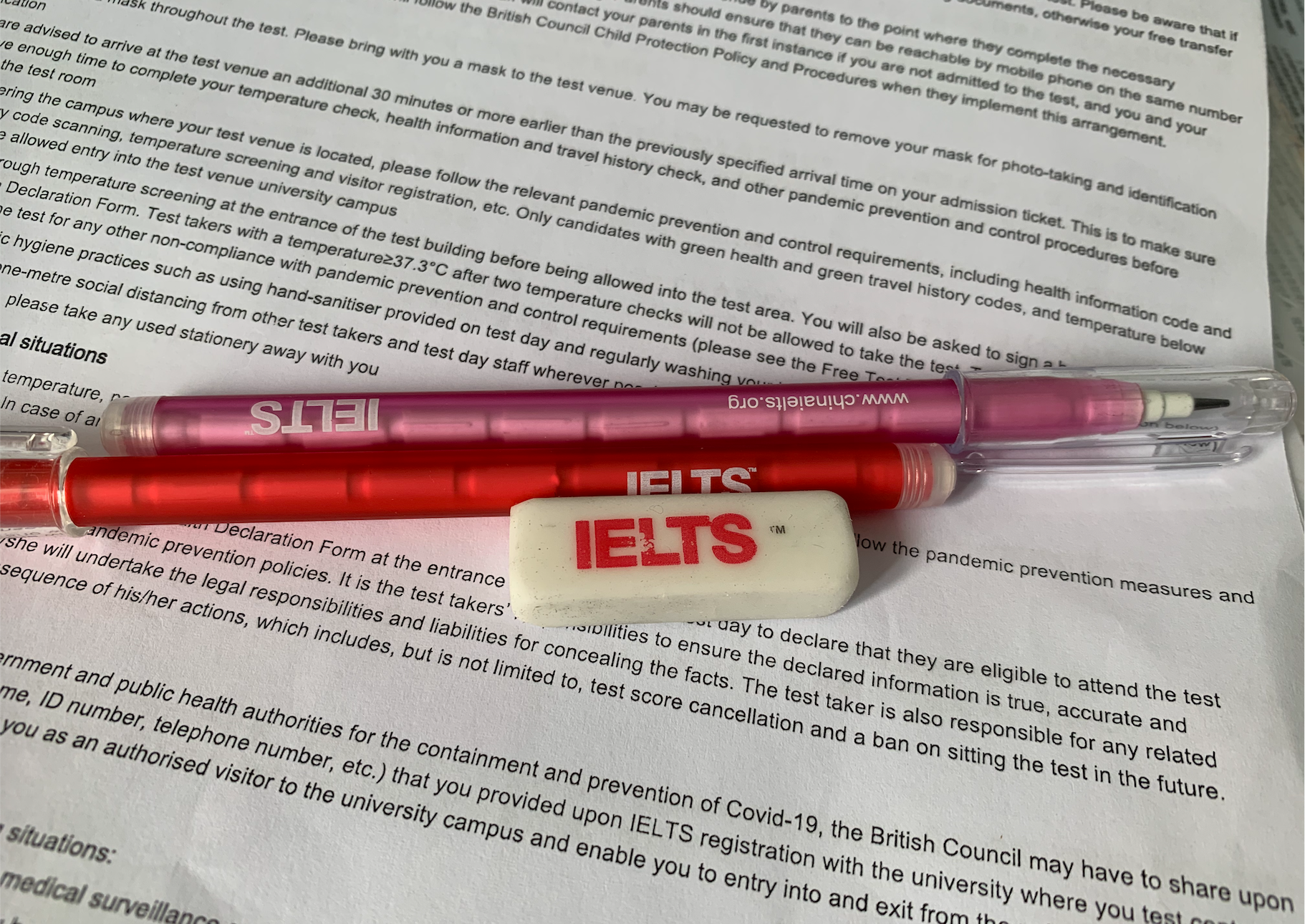
| Mechanical pencil (IELTS-style) | ¥11.56 |
| Gu Jiabei’s IELTS Writing Guide 5.0 | ¥29.80 |
| IELTS registration fee | ¥2170.00 |
| IELTS vocabulary flashcards | ¥18.32 |
| Cambridge IELTS Book 15 | ¥22.00 |
| Speaking materials (Sep-Dec) | ¥110.00 |
| Reading predictions (Laokaoya) | ¥36.00 |
Preparation
Spending money is the easy part — the real challenge is making good use of the materials. Practicing with past papers goes without saying. I planned to work through all of them, so even though my exam was in October 2020, I’d bought the practice books back in November 2019.
While doing practice tests, I tracked my scores in a spreadsheet, logging every session for easy progress tracking. My records are in Google Docs — you can see them here: http://bit.ly/ielts4elton

I won’t go into other online courses — just study whatever you feel you’re lacking. But several websites helped me a lot, so I’ll share them:
A WordPress-based site with tons of IELTS info, all in Chinese, very user-friendly. They also have a WeChat official account. Personally, I used their speaking practice section the most — they compile recent speaking test topics with sample answers. This alone made buying separate materials unnecessary.
An English-language site. The content isn’t comprehensive and doesn’t cover the latest Cambridge books, but it’s great for early-stage listening practice. Try one test and you’ll see.
A famous IELTS teacher? Maybe, haha. He’s a former IELTS examiner, and his site has plenty of useful info.
I’m not kidding — YouTube has a massive amount of IELTS content. It might be the single most helpful resource I used. I followed Liz and watched many of her courses, which helped with both listening practice and understanding the exam. And there’s Ronnie’s channel — this Canadian English teacher is hilarious. Probably my favorite.
I’m not entirely sure what platform this falls under, but it has tons of science and tech news. I browse it regularly — lots of interesting stories. Since IELTS reading covers all sorts of topics and I naturally gravitate toward science news, this was great. The downside is the lack of humanities content. So during practice, I noticed that whenever a humanities topic came up, I’d struggle, while science topics were no problem.
Speaking
My speaking test was scheduled the day before the written exam, at 2:10 PM. Since it was an afternoon slot, there was no rush — I spent the morning at the library reviewing speaking materials. Studied from 9 AM to 11:30 AM, then headed to the school cafeteria for lunch. I was so nervous I could barely eat half a bowl before leaving. I stashed my extra belongings in the lab and headed to the school gate to catch the bus. The map showed about 50 minutes to the venue — I was at the gate by noon, so plenty of time.
Oh, I forgot to mention — the test center was the Hangzhou Education Examination Center. After getting off the bus and walking over, it wasn’t even 1 PM yet. Barely anyone was at the entrance. I’d expected a crowd of early arrivals like me. I went through the side entrance, showed my health code, then my travel history. Then came the waiting. Since I still had an hour before my test, I watched IELTS speaking mock tests on YouTube in the lobby. I’d seen plenty of these videos before — last-minute cramming wasn’t going to help much. It was more of a relaxation exercise.
While waiting, I watched two groups get escorted to the exam rooms, so I got familiar with the check-in process. At 13:40, staff had the 14:10 candidates line up by number. Each group had ten people — ours had two no-shows. I couldn’t help thinking these people must have money to burn. The staff briefed us in Chinese on the procedures, gave each of us two numbered tags — one to keep, one with a clip for our bags. We clipped the tags onto our bags and placed them on a cart. The clip numbers didn’t matter — they were just for retrieving bags afterward. The bags would be moved to the exit area.
After bag check-in, we entered another waiting room for information collection — mainly photos and fingerprints. We went in order, starting with the first exam room. When my turn came, they first had me verify my information, then I signed my name in pinyin and Chinese characters. I sat in front of a camera, removed my glasses and mask, and had my photo taken. Next was fingerprint scanning — right index finger, pressed five times, same as any other fingerprint device. The last staff member had me confirm the form details again, checked my ID card photo against my face, verified the ID expiration date, and stuck a barcode on the back of my ID card. Said to peel it off after tomorrow’s written exam.
I was assigned to Room 05, so five more people followed after me. Once everyone was processed, we were taken upstairs to the second floor. I waited briefly in the corridor — the exam rooms were right in front of us, and I even saw a candidate walk out after finishing. I was a little nervous, but less than before. After about two minutes, staff positioned each of us in front of our assigned rooms and told us to sit and wait.
I noticed the examiner across the hall was a middle-aged Western man and wondered if mine would be similar. I’d heard from a senior student that this center had some Indian examiners, and I was hoping my luck wasn’t that bad. But when my examiner called me in, she turned out to be a young Indian woman. I figured it probably wouldn’t matter much — it was just basic conversation. I didn’t overthink the accent thing.
As usual, the examiner introduced herself and said her name. I’d planned to respond with “Good afternoon, [examiner’s name]” following Liz’s Part 0 tutorial on YouTube, but I honestly couldn’t catch her name, so I just went with the greeting. I don’t think it was a big deal. Then she asked my name and where I’m from — standard questions for everyone. She asked to see my ID — I was about to slide it through the gap under the acrylic panel, but she just had me hold it up for her to see.
Oh right — let me describe the exam room setup during COVID. Everyone had to wear masks throughout. There was an acrylic panel (roughly 60×40 cm) between the candidate and the examiner. There was a small gap at the bottom — hence why I tried to slide my ID through, embarrassingly. On the right side were a pencil and a sheet of paper for Part 2. I’d expected half a sheet of A4 white paper, but it was just a regular page torn from a lined notebook. Pretty casual. Then Part 1 began. The questions were all fairly standard — I’d seen them in the question bank and had prepared, so I think I did okay, at least in terms of fluency. Grammar errors — that I couldn’t tell. For Part 2, the examiner clipped the question onto the acrylic panel — three simple sub-questions about a book I’d read recently. I jotted down some notes. The one-minute prep time flew by. Then came my two minutes to speak. But I ran out of things to say after about one minute. I thought about it, had nothing to add, and since I didn’t know the time, I said I was done and started to hand back the paper and pencil. The examiner told me to keep going, so I had to scramble and pad things out until she finally stopped me. Part 3 was related follow-up questions about libraries and books. Fairly standard stuff, I thought. I followed Simon’s advice: “Answer the question, then add a simple reason.”
Even though she was an Indian examiner, I didn’t have trouble understanding her at any point during the test. There was one moment where she spoke too fast and I wasn’t sure about a question, so I just answered based on my best interpretation. The other thing that probably cost me points was the Part 2 stumble. Plus grammar errors — even though I tried to avoid them, there were surely plenty.
After the test, the examiner told me to take the pencil and toss the paper in the nearby trash can. I didn’t catch the trash can part and was about to walk out with the paper, then got reminded. And with that, I left the exam room, picked up my bag, and headed out.
As for the speaking materials — I bought a set on Taobao. Honestly, I don’t think it was necessary. First, memorizing answers isn’t realistic. The materials are just questions with corresponding answers, so there’s a massive amount of content — impossible to memorize everything. Second, examiners can easily spot memorized answers, and that’s something IELTS penalizes heavily — suspected scripted responses usually get low scores. So why did I buy them? Basically for peace of mind. I felt underprepared and wanted a systematic collection of questions to review. I figured if my own stories weren’t good enough, I could reference their answers. But when I actually studied, I found their answers didn’t suit me at all, so I never used them. Instead, I’d look at the questions, think through my own answers, write them down, and organize them into personal responses.
In the end, the materials were genuinely useless to me. If all I needed was the questions and could come up with answers myself, I didn’t need to buy anything. Laokaoya’s website has very detailed, well-organized questions for free. But hey — I was buying peace of mind, so chalk it up to impulse spending.
Written Exam
After the speaking test, I went straight back to prepare for the rest. I’d bought reading prediction materials from Laokaoya and needed to at least skim through them before the exam, even if just reading the answers. I also needed to review Task 1 writing. I still couldn’t write about numerical relationships properly — it was frustrating.
My written exam was scheduled for the day after speaking. I was happy about that, since the registration notes said speaking could be on any day around the written exam date. So having them back-to-back was ideal. After finishing the speaking test, knowing the written exam was tomorrow, plus receiving an internship offer the same day — I was buzzing with excitement. Before bed, I wondered if I’d be able to fall asleep early. I turned off my phone at 11:30 PM, set my alarm, and asked my roommate to set a backup alarm on his phone. I didn’t sleep a wink all night. The whole night was a cycle of wanting to check the time but telling myself not to because it would make things worse. Through this tortured indecision, I checked three times: 01:03, 03:12, and 05:34. The night passed just like that. I wasn’t too tired in the morning. I thought about getting coffee but decided to stick with my normal breakfast. I was afraid anything unusual might cause problems during the exam — a risk I couldn’t afford.
I headed to the school gate and called a Didi (ride-hailing). First I confirmed which phone number I was logged in with, since I’d been switching phones and occasionally using different numbers. I grabbed baozi, a tea egg, and milk from the shop across the street. As I was walking back to the pickup point, the Didi driver called — I told him I was right behind him. Got in, headed to the exam center.
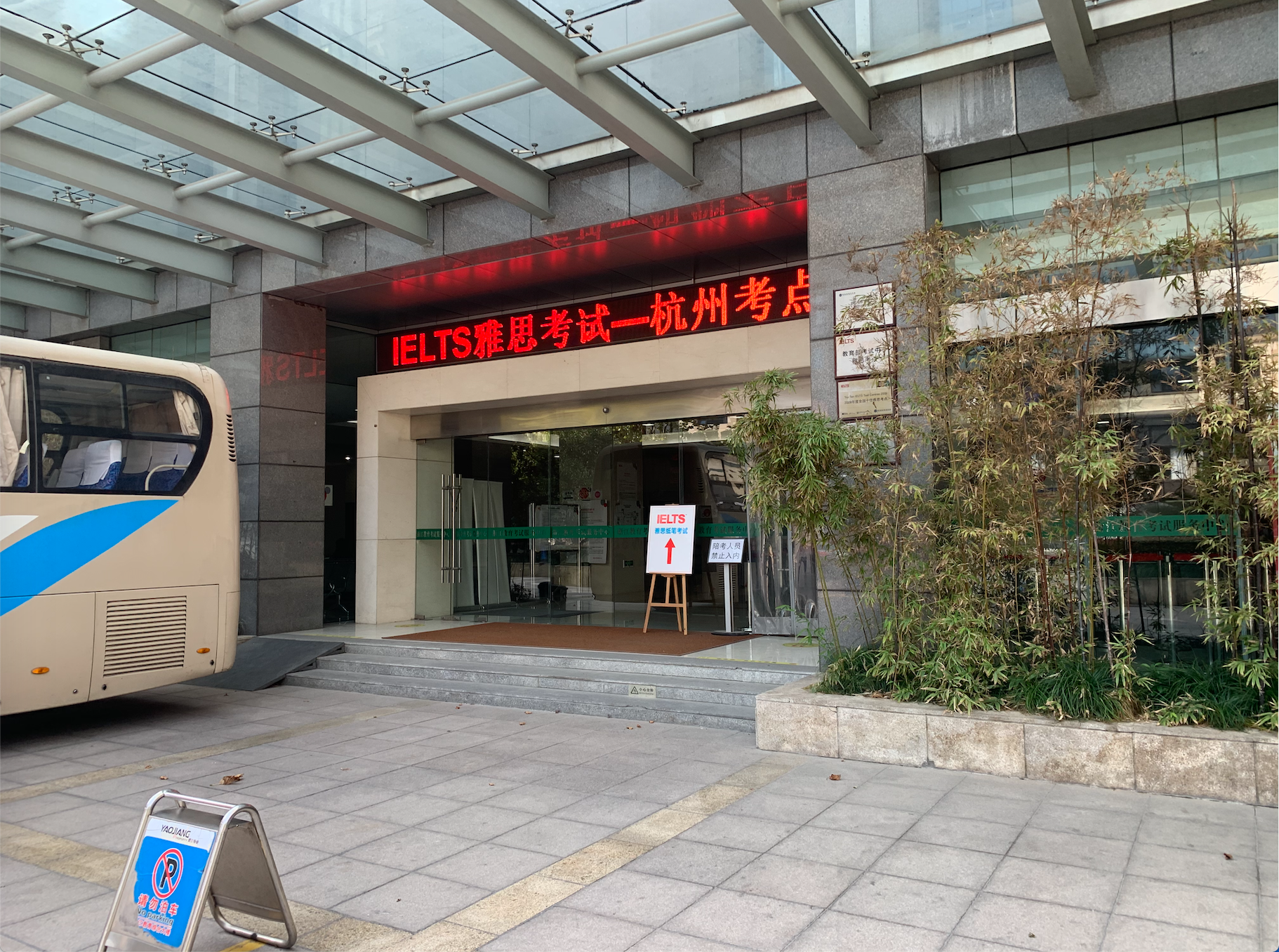
I arrived quite early. After yesterday’s speaking test, staff had told us to arrive between 7:15 and 8:00 the next day. I got there around 7:00, but they weren’t letting candidates in yet — only staff were going in. Signs at the entrance said to have your health code and travel history ready. Since I’d done this yesterday, I had everything prepared. I pulled out my notes to review Task 1 vocabulary. Even with the exam so close, Task 1 was still my weakness. I was looking things over, but my mind wasn’t really absorbing anything anymore. Maybe it was just a way to ease the nerves.
The crowd outside grew. I noticed a boy who’d arrived even earlier than me — looked like a middle schooler, accompanied by his mom. I suddenly felt old. I couldn’t help thinking about the gap — this kid was taking IELTS in middle school, and I only started thinking about it a couple years ago.
At 7:15, the doors opened and I was among the first batch in. Same deal — keep only your admission ticket, bag claim number, and ID on you. Registration ID for ID, registration passport for passport. You could bring unlabeled water — that was stated. Tissues were allowed but not too many. I brought nothing — I usually don’t drink water in the morning, so going without was normal for me. I also didn’t want water to eat into precious exam time. After checking bags, we went upstairs to the second-floor hallway. Staff directed us into a room one by one to verify fingerprints and ID, then fastened a paper wristband on us. From there, we were escorted to our assigned exam room doors to wait.
I was the first one waiting at my room. The room staff were still setting up inside — it was only about 7:30. I just waited, not wanting to chat with anyone or lose focus. Around 8:00, after the examiner came out to swap a batch of headphones with a volunteer, they let us in.
I was the first one in. Inside, there was a desk at the front of the classroom with two chairs. The proctor sat across from me. First I signed a health declaration. Then the proctor asked: “Do you have any electrical devices?” “Do you have anything in your pocket?” “Show the inside of your mask.” “Can I see your glasses?” One more signature and done. Another proctor scanned me with a metal detector, then walked me to my seat. They confirmed my ID matched the information on the desk, and I sat down to wait. It was around 8:10. My seat was in the second row, middle section. Everyone who came in got the same questions and signatures — which is how I ended up memorizing those sentences.
Listening
By around 8:50, everyone was in. A few were no-shows — again I marveled at people’s willingness to waste that money. At 9:00, staff delivered the test papers. We were told to put on headphones and test the audio. Many people complained about static noise. Mine had it too, but I figured it was manageable and didn’t ask for a replacement. But since everyone else was swapping, I asked to try another pair. The proctor handed me one and reached for my original. I asked to compare them first — turns out the new one was even worse, so I kept my original.
First came the answer sheet — same format I’d used in practice, front and back. But the fill-in positions were slightly different, nothing major. The exam room had clear instructions on how to fill it in. The proctor explicitly told us to keep it on the Listening side — Listening was green-themed, Reading on the back was blue-themed, very obvious. Then the listening booklet was distributed. We wrote our candidate and room numbers as instructed — no opening the booklet yet. After the sound check, the test began.
Here’s a listening tip that helped me score a point. I’ve always been weak with numbers, especially when they read out phone numbers quickly — I can’t write them down fast enough. Right before the listening test, I came up with a strategy: write out the Arabic numerals 0-9 in a row, then write the corresponding English words below each one. That way I could quickly match what I heard. I wrote this cheat sheet on my answer sheet and planned to erase it afterward.
I didn’t expect the very first question to be a number — a nine-digit phone number, no less. Lucky me. Whether I got it right or not, at least I wrote something down — a first for me. The rest was standard. We couldn’t remove headphones until the audio prompted us.
I won’t comment on difficulty — I’m not brave enough to speculate before scores come out. Especially since after checking answers, I might not even hit 7 on listening. That would be heartbreaking.
After listening, the proctor clearly stated we must put our pens down. They collected the test booklets. We flipped our answer sheets over to the Reading side.
Reading
Then the reading booklet was distributed. I always used to accidentally write Y/N/NG answers as T/F/NG. So this time, the moment we could open the booklet, I immediately checked for any Y/N/NG questions and marked it on my answer sheet. No more mix-ups.
Since I’d gone through all of Laokaoya’s reading predictions, I was hoping to see some familiar passages — but none of the three matched. Fair enough, that’s normal. Then I allocated time as usual. Our section started at 10:02, so I wrote the end times next to each passage title: Passage 1 at 10:22, Passage 2 at 10:42, Passage 3 at 11:02. As always, I spent the least time on Passage 1 — just 15 minutes — to bank time for the harder passages later.
But this time, the reading section had too many uncertainties. The hardest part was the paragraph heading matching. I found it really difficult — no idea how others felt. After the exam, I checked a WeChat account’s analysis and it confirmed the test was on the harder side. So I couldn’t predict my score at all.
Then time was called, pens down. The person next to me didn’t stop writing and got a warning from the proctor. I imagine that affects your state of mind.
Writing
For writing, I followed the recommended strategy: write Task 2 (the essay) first, then Task 1. Same as in practice. Task 2 wasn’t too difficult — I finished in 40 minutes, leaving 20 for Task 1. I knew my Task 1 was bad — lots of repetitive sentence patterns, nothing creative. I could only hope to at least get the Task Response score. I tried to minimize obvious grammar errors. I did my best, haha. If the score isn’t great, I’d probably agree it’s deserved. Everything else I’d been practicing, consciously or not, throughout the year — but writing was the one area where I’d never actively practiced writing in English. So that’s where I’ll need to put in more effort going forward.
Final Thoughts
Overall, there wasn’t much to complain about — it’s a highly standardized exam after all. The only things to complain about are my own listening and writing. This IELTS wasn’t intended as a credential for studying abroad — it was mainly to prove my English level to myself. I’d previously taken an EF English proficiency test (50 minutes), scored 65 on average, and initially thought that was terrible. But then I saw the rating was C1 ADVANCED, with only C2 PROFICIENT above it. So basically second from the top.
Beyond proving my ability, exam prep is also a great way to keep studying consistently. In the early days without exam pressure, doing English reading practice was actually quite relaxing. Learning new vocabulary aside, some of the passages told great stories. It was like — I wasn’t reading books, but at least the practice passages showed me interesting things. Some passages or articles could be found online, so for readings that required background knowledge, I’d go learn about the context too.
So this probably won’t be my last IELTS exam. I’ll upload this time’s scores next month.